
1. The Legal Foundation of Negligent Security Lawsuits
Negligent security cases are rooted in civil negligence and premises liability doctrine. Unlike a criminal prosecution, which seeks to punish the individual attacker, a civil premises liability claim seeks financial compensation from the property owner whose oversight created an environment where the crime could easily occur.
To establish a successful negligent security claim, an injured victim (the plaintiff) must establish four core legal elements:
- Legal Duty of Care: The defendant owned, leased, or managed the property and owed a legal obligation to provide a safe environment for lawful visitors, customers, or tenants.
- Breach of Duty: The property owner failed to implement reasonable security measures suitable for the location and known risk levels.
- Causation: The lack of adequate security was a substantial factor in enabling the third-party criminal act to take place.
- Compensable Damages: The victim suffered quantifiable physical injuries, emotional trauma, medical expenses, or financial loss resulting from the incident.
2. Foreseeability and Constructive Notice
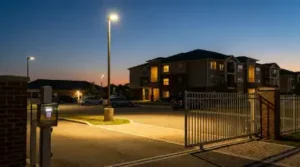
The cornerstone of any inadequate security case is the concept of foreseeability. Property owners are not automatically liable for every random criminal act that occurs on their grounds. Liability attaches only when the risk of crime was foreseeable, meaning the owner knew—or should have known through reasonable diligence—that visitors were vulnerable to criminal activity.
Courts evaluate foreseeability by reviewing actual or “constructive” notice. Key evidentiary factors include:
- Prior Criminal History: A documented pattern of similar violent or property crimes occurring on or near the premises in the months or years preceding the incident. Detailed analysis of local police call logs and crime statistics frequently reveals whether an owner ignored explicit safety trends.
- Tenant and Patron Complaints: Written requests or verbal reports from residents regarding broken locks, suspicious trespassers, or non-functioning lighting that went unaddressed by management.
- Location and Property Type: High-risk environments—such as 24-hour convenience stores, multi-level parking garages, cash-dispensing kiosks, or apartment complexes in high-crime neighborhoods—carry a heightened duty to install robust physical safeguards.
Under established guidelines published by the Justia Premises Liability Center, demonstrating that an owner had notice of predictable security gaps is the single most critical step in establishing civil liability.
3. Common Patterns of Inadequate Security
Negligent security manifests across commercial and residential properties in various physical and operational ways. Common structural and procedural security failures include:
A. Broken or Malfunctioning Physical Access Controls
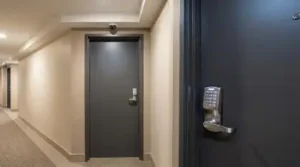
Apartment buildings, gated communities, and hotels must maintain functional physical barriers to exclude unauthorized individuals. Defective door latches, broken electronic keypads, unlatched security gates, or propped-open service entrances allow intruders effortless entry into private living spaces and stairwells.
B. Insufficient or Inoperable Lighting
Inadequate illumination in parking lots, dark exterior walkways, staircases, and ATM enclosures creates ideal hiding spots for violent assailants. Replacing burnt-out bulbs and eliminating dark corners are among the simplest, most cost-effective security precautions a business owner can take.
C. Missing or Unmonitored Surveillance Systems
While security cameras serve as strong visual deterrents, dormant cameras, non-functional DVR recorders, or unmonitored feeds provide a false sense of security while failing to deter criminal behavior.
D. Absent or Inadequately Trained Security Guards
Venues operating in high-density or high-crime areas often require visible security personnel. Failing to hire qualified guards—or employing guards who lack proper emergency response training—leaves patrons completely unprotected during a sudden security crisis.
Comprehensive legal breakdowns available from the Ben Crump Law Negligent Security Guide emphasize that physical evidence like maintenance logs, security video, and police dispatch records are vital for proving these operational failures.
4. Proving Causation and Securing Compensation
Establishing that security was inadequate is only part of the legal equation; the plaintiff must also prove causation. The legal team must demonstrate that the assault, robbery, or attack likely would not have occurred had the owner maintained reasonable physical security measures. For instance, if an attacker entered a residential building through an electronic security gate that had been broken for months, the mechanical defect directly facilitated the crime.
Victims of violent crimes on commercial properties often suffer profound physical and psychological consequences. Compensation in a successful claim can cover:
- Emergency and Ongoing Medical Expenses: Emergency room treatment, surgeries, inpatient hospital stays, and ongoing rehabilitation costs.
- Lost Income and Diminished Earning Capacity: Wages lost during physical recovery and future lost earnings if injuries cause permanent disability.
- Psychological Trauma and Mental Anguish: Specialized therapy and psychiatric care for severe Post-Traumatic Stress Disorder (PTSD), anxiety, sleep disruption, and depression following a violent assault.
- Pain and Suffering: Non-economic damages awarded for physical pain, disfigurement, and loss of enjoyment of life.
5. Steps to Take After an Incident on Commercial Property
If you or a loved one is victimized on a commercial or residential property, taking immediate action preserves critical evidence needed to support a legal claim:
First, report the crime to local law enforcement immediately and insist on a formal police report. Document physical injuries with detailed photographs and seek immediate emergency medical care.
Second, take clear photographs of the surrounding scene, paying special attention to burnt-out light fixtures, broken locks, damaged access gates, or missing warning signs. Obtain contact information from any eyewitnesses or neighboring residents.
Finally, contact an experienced premises liability attorney as soon as possible. Experienced legal counsel can instantly issue formal evidence preservation letters to property managers, preventing surveillance video footage from being routinely overwritten or maintenance records from being altered.