
In personal injury litigation, proving the full extent of a client’s injuries has traditionally relied on subjective medical reports, diagnostic imaging, and personal pain journals. For decades, defense insurance adjusters routinely challenged soft-tissue injuries, mild traumatic brain injuries (mTBIs), and chronic pain conditions by labeling them as unverified, delayed, or linked to pre-existing conditions. However, the legal environment surrounding motor vehicle accident claims has undergone a profound technological transformation.
The widespread integration of consumer health wearables—such as smartwatches, biometric bands, and continuous health monitors—combined with advanced Vehicle Internet of Things (IoT) telematics has created an objective, real-time digital paper trail. Today, injury victims and personal injury attorneys are leveraging synchronized biometric and vehicular telematics data to establish exact crash timestamps, quantify acute physiological trauma, and track long-term recovery metrics with mathematical precision.
The Convergence of Health Biometrics and Vehicle Telematics
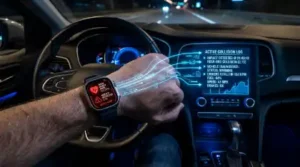
Modern motor vehicles are no longer simple mechanical machines; they are sophisticated edge-computing platforms continuously transmitting telemetry to cloud servers. Simultaneously, millions of drivers and passengers wear smart devices that constantly record heart rate variability (HRV), blood oxygen saturation, skin temperature, sleep architecture, and sudden physical impacts.
When a collision occurs, these two distinct data streams intersect to form an indisputable record of the event:
- Vehicle IoT Data: Onboard diagnostic units (OBD-II), Event Data Recorders (EDRs), and connected cloud services log precise deceleration G-forces, seatbelt tensioner activation, steering wheel angle changes, airbag deployment milliseconds, and speed trajectories immediately preceding impact.
- Biometric Telematics: Wearable health devices record the human body’s immediate physiological response—capturing instantaneous heart rate spikes, emergency fall-detection triggers, sudden movement interruptions, and acute physical shock responses at the exact millisecond of impact.
By cross-referencing vehicle deceleration logs with the victim’s wearable telemetry, personal injury lawyers can present juries and insurance adjusters with a complete physical and physiological timeline of the collision.
Overcoming the “Pre-Existing Condition” Defense
One of the most persistent defense tactics in motor vehicle injury claims is asserting that a victim’s pain, insomnia, or cognitive difficulties existed prior to the collision. Wearable biometric data provides an effective tool to counter this argument.
Because consumer wearables continuously collect passive baseline health metrics over months or years, plaintiff attorneys can establish a clear “before-and-after” health profile. For example:
- Sleep Architecture Metrics: Demonstrating that a client experienced consistent deep sleep cycles prior to the accident, followed by immediate, documented post-crash sleep disruptions and elevated nocturnal heart rates caused by chronic pain or post-traumatic stress.
- Resting Heart Rate & HRV Shifts: Presenting continuous physiological data showing a permanent increase in baseline resting heart rate or a sustained drop in heart rate variability (HRV), establishing systemic neurological stress following a neck or head injury.
- Mobility and Physical Activity Tracking: Using daily step counts, active energy expenditure, and gait stability metrics to demonstrate a sudden, measurable drop in physical mobility directly coinciding with the date of the crash.
This long-term comparative data makes it significantly harder for insurance carriers to dismiss ongoing symptoms as pre-existing, non-compensable issues.
Evidentiary Admissibility, Chain of Custody, and Authentication
While wearable biometrics and vehicle IoT logs provide valuable evidence, introducing digital telematics into a personal injury lawsuit requires strict adherence to evidence rules and digital forensics standards.
Establishing Chain of Custody
To prevent claims of data tampering or alteration, digital health records must be extracted using validated forensic software. Raw data files exported directly from health cloud servers (such as Apple HealthKit, Garmin Connect, or WHOOP API) contain immutable metadata timestamps, device serial numbers, and cryptographic signatures that verify authenticity under Federal Rule of Evidence 901/902 guidelines.
Expert Testimony and Corroboration
Courts generally require expert testimony to interpret complex telematics data for a jury. Digital forensics experts authenticate the device extraction, biomedical engineers correlate impact G-forces with anatomical stress tolerances, and treating physicians correlate biometric spikes with acute traumatic responses.
Protecting Client Privacy: Fighting Insurance Subpoena Overreach

While wearable data offers strong evidentiary value for plaintiffs, it also presents privacy risks. Insurance defense attorneys frequently issue broad discovery requests seeking complete, unredacted access to a victim’s entire historical wearable database—hoping to uncover unrelated physical activities or past ailments to diminish claim value.
Plaintiff attorneys must establish strong protective measures to prevent fishing expeditions:
- Narrowing Discovery Scope: Filing motions for protective orders to restrict discovery strictly to relevant biometric parameters (e.g., heart rate logs, sleep tracking, and activity levels) within a defined temporal window surrounding the accident.
- In Camera Judicial Review: Requesting that judges review raw digital health files in private before releasing sanitized, relevant data sets to defense counsel.
- HIPAA and Stored Communications Act (SCA) Protections: Asserting statutory privacy rights to prevent third-party wearable manufacturers from directly releasing private health cloud backups without explicit user consent or a narrowly tailored court order.
Critical Action Steps for Injury Victims Following an Accident
If you are involved in a car accident while wearing a smartwatch or fitness tracker, taking immediate action preserves your digital evidence:
- Maintain Device Power and Sync: Ensure your wearable device remains powered on and immediately synchronize it with your mobile app to prevent real-time cached crash data from being overwritten.
- Preserve Unedited Cloud Backups: Create an immediate, full cloud backup of your health application account and refrain from deleting, editing, or re-categorizing activity sessions recorded on the day of the crash.
- Save Vehicle Telematics Subscriptions: Maintain active connected-vehicle subscriptions (e.g., OnStar, mobile OEM apps) and request copy downloads of driver telemetry logs.
- Issue Immediate Data Preservation Notices: Consult with a personal injury attorney who can issue formal spoliation letters to both vehicle telematics providers and third-party data platforms to preserve raw crash-second telemetry before automated deletion protocols occur.
Conclusion
The integration of wearable biometrics and vehicle IoT telematics marks a major evolution in personal injury litigation. By combining real-time human physiological responses with vehicle impact data, injured parties can build objective, evidence-backed claims that withstand aggressive insurance defense tactics. As connected tech becomes standard in daily life, leveraging health telematics will remain essential to securing fair compensation for car accident victims.