
Self driving vehicles are becoming more common on public roads as car manufacturers continue to introduce advanced driver assistance and automated driving systems. These technologies are designed to help reduce human error and improve road safety. However, when a crash occurs involving an autonomous vehicle, determining liability can become much more complicated than a traditional car accident.
Unlike standard accidents where driver negligence is usually the main issue, self driving car crashes may involve multiple parties. The human driver, vehicle manufacturer, software developers, and even parts manufacturers may all play a role in determining responsibility. Understanding how liability works in these cases is important as autonomous technology continues to evolve.
Why Self Driving Car Accidents Are Different
Traditional car accident claims usually focus on whether a driver acted negligently. Drivers may be held responsible if they were speeding, distracted, impaired, or violating traffic laws.
Autonomous vehicles introduce additional layers of technology that can influence how accidents occur. These vehicles rely on complex systems that include cameras, radar, sensors, artificial intelligence software, and automated decision making.
When a crash happens, investigators may need to determine whether the accident resulted from human error, a technological malfunction, or a combination of both. Because several systems interact during automated driving, identifying the source of the failure can require detailed technical analysis.
Levels of Vehicle Automation
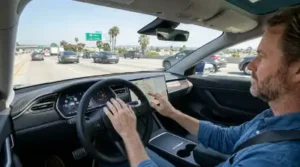
Not all vehicles marketed as self driving are fully autonomous. The Society of Automotive Engineers classifies automated driving technology into several levels.
- Level 0: No automation. The driver performs all tasks.
- Level 1: Basic driver assistance such as cruise control.
- Level 2: Partial automation including lane keeping and adaptive cruise control.
- Level 3: Conditional automation where the vehicle performs driving tasks but requires human intervention in certain situations.
- Level 4: High automation where the vehicle can operate without human input in specific environments.
- Level 5: Full automation where no driver is required.
Most vehicles currently on the road fall into Levels 2 or 3, meaning a human driver must still remain attentive and ready to take control if necessary.
Possible Liable Parties in a Self Driving Car Accident
Because multiple technologies are involved in autonomous vehicles, several parties may potentially share responsibility when a crash occurs.
The Human Driver
Even when automated driving systems are active, many vehicles still require the driver to supervise the vehicle and intervene if the system encounters a situation it cannot handle.
If a driver ignores warnings, misuses the system, or fails to take control when required, they may still be considered partially responsible for the crash.
The Vehicle Manufacturer
Car manufacturers may face liability if a defect in the vehicle contributes to the accident. This could involve faulty braking systems, malfunctioning sensors, or design flaws that prevent the vehicle from responding properly to hazards.
In these cases, legal claims may fall under product liability law rather than traditional negligence.
Software Developers
Autonomous vehicles depend heavily on complex software systems that analyze data and make driving decisions. If an error in the software causes the vehicle to misinterpret road conditions or fail to detect obstacles, the developer responsible for the software may share liability.
These cases often require experts who can analyze the vehicle’s algorithms and digital data logs.
Component Manufacturers
Self driving vehicles rely on numerous hardware components including radar units, cameras, sensors, and computer processors. If a defective component fails during operation and contributes to a crash, the manufacturer of that component may also be involved in the case.
Commercial Operators or Fleet Companies
Some autonomous vehicles operate as part of commercial fleets or ride sharing services. In these situations, the company responsible for operating and maintaining the vehicle may also play a role in determining liability if maintenance issues or system monitoring failures contributed to the accident.
Evidence Used in Autonomous Vehicle Accident Investigations
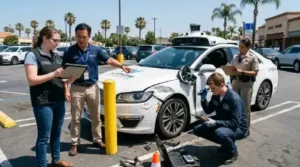
One of the key differences in self driving car accident cases is the amount of digital evidence that may be available. Autonomous vehicles constantly collect and store large amounts of data about their environment and driving behavior.
This data may include:
- Vehicle system logs
- Camera footage
- Sensor data
- GPS location records
- Driving decision reports
- Remote monitoring information
Investigators may analyze this data to determine how the vehicle responded before the crash occurred. These records may show whether the vehicle detected hazards, issued warnings to the driver, or attempted to take evasive action.
Because autonomous vehicles rely heavily on technology, digital evidence can play a major role in determining what happened during the incident.
Insurance Issues in Self Driving Car Accidents
Insurance coverage for autonomous vehicle accidents continues to evolve as the technology becomes more widely used. Traditional auto insurance policies are designed to cover driver negligence. However, when technology plays a role in the crash, other forms of coverage may apply.
For example, product liability insurance carried by manufacturers may come into play if a defective system contributed to the accident. Commercial fleet operators may also carry specialized policies for autonomous vehicle operations.
Because liability may involve several parties, insurance claims in these cases can become complex.
The Future of Autonomous Vehicle Accident Law
Autonomous driving technology continues to develop rapidly. Governments and regulatory agencies are working to establish legal standards that address the unique challenges presented by self driving vehicles.
New regulations may define how responsibility is assigned when automated systems are involved in traffic violations or collisions. Courts may also continue to refine how existing negligence and product liability laws apply to autonomous technology.
As more autonomous vehicles enter public roads, legal frameworks will likely continue evolving to address the intersection of technology, transportation, and public safety.
Related Articles
If you are interested in learning more about accident liability and personal injury law, you may find these articles helpful:
- Understanding Comparative Fault in California Accident Cases
- How Technology Shapes Injury Claims
- Major Personal Injury Verdicts Making Headlines
These resources discuss how liability is determined in modern accident cases and how emerging technology continues to influence personal injury law.